Volcengine ADK
多智能体概述
本文档介绍如何在同一系统中定义、协作和运行多个智能体(Agent),多 Agent 系统的设计核心在于角色分工与通信机制。
通过合理的协作策略,可将复杂任务拆解为可控的子任务,从而提高整体稳定性与可扩展性。
多 Agents 系统构建
多智能体系统通常由若干具备独立职责的 Agent 组成。主 Agent 的常见类型包括:
- 自主决策 Agent:基于大语言模型的通用智能体,支持自然语言理解、推理与生成,可配置工具、记忆、知识库等功能
- 工作流 Agent:针对特定执行模式优化的 Agent,包括顺序执行、并行执行、循环执行等模式,适用于不同的任务编排场景
自主决策 Agent
定义:自主决策 Agent 是 VeADK 的核心智能体,基于大语言模型构建,支持完整的智能对话、工具调用、记忆管理等功能。它可以根据配置自动调用子 Agent 或工具来完成复杂任务。
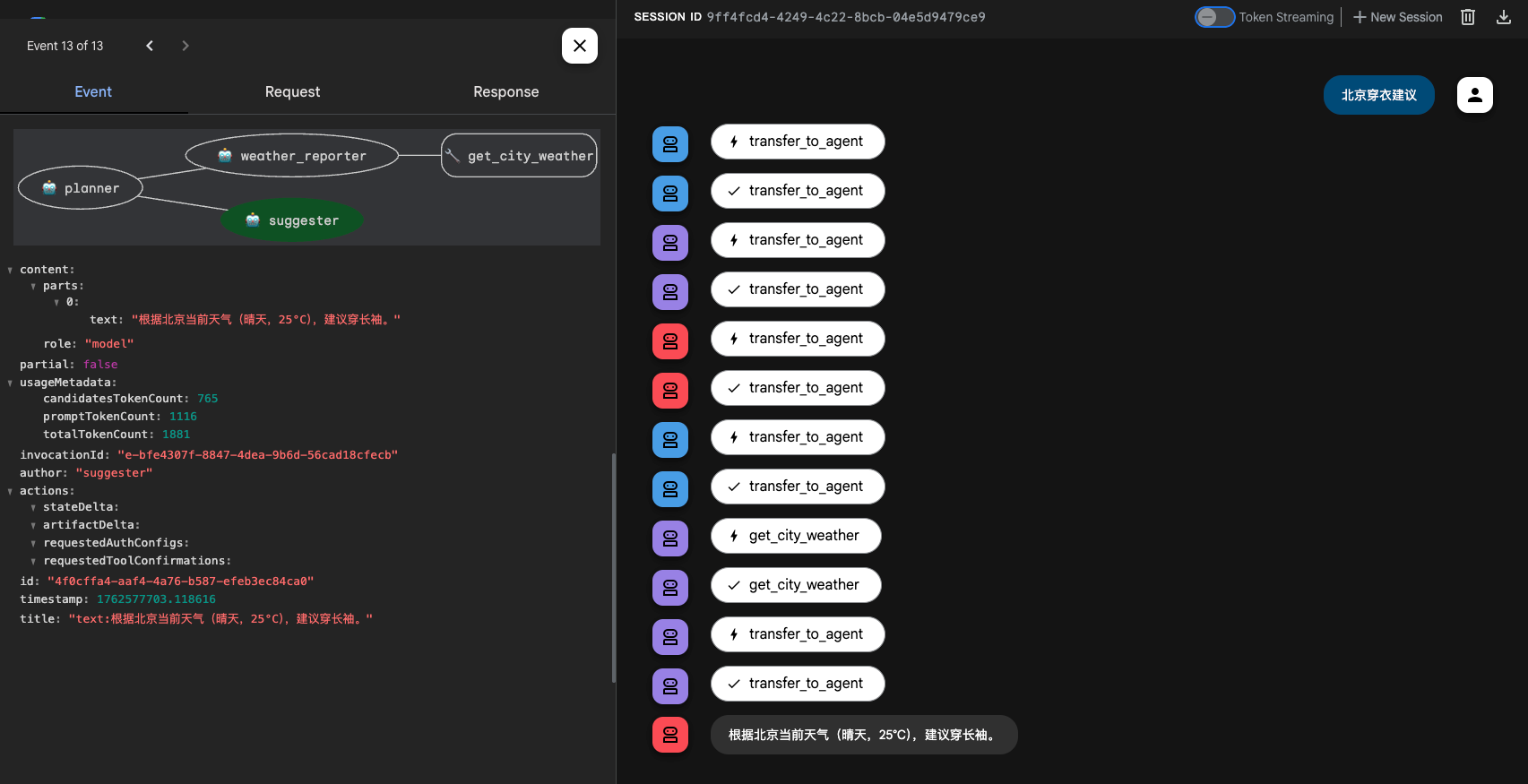
样例:下面给出一个生活建议 Agent 来演示说明自主决策 Agent 的主要交互方法。其中,主 Agent 负责接收用户输入,子 Agents 分别负责获取天气及给出穿衣建议。自主决策型 Agent 调用示意图如下所示:主 Agent 根据用户提示场景,首先调用了天气 Agent 来获取天气情况,随后调用了穿衣建议 Agent 来给出穿衣建议。
运行前,通过环境变量提供模型 API Key(VeADK 默认读取 MODEL_AGENT_API_KEY):
export MODEL_AGENT_API_KEY="<你的方舟 API Key>"import asyncio
from veadk import Agent, Runner
from veadk.tools.demo_tools import get_city_weather
weather_reporter = Agent(
name="weather_reporter",
description="A weather reporter agent to report the weather.",
tools=[get_city_weather],
)
suggester = Agent(
name="suggester",
description="A suggester agent that can give some clothing suggestions according to a city's weather.",
instruction=(
"Provide clothing suggestions based on weather temperature: "
"wear a coat when below 15°C, long sleeves when 15-25°C, "
"short sleeves when above 25°C."
),
)
root_agent = Agent(
name="planner",
description="A planner that can generate a suggestion according to a city's weather.",
instruction=(
"Invoke weather reporter agent first to get the weather, "
"then invoke suggester agent to get the suggestion. "
"Return the final response to user."
),
sub_agents=[weather_reporter, suggester],
)
if __name__ == "__main__":
runner = Runner(root_agent)
response = asyncio.run(runner.run("北京穿衣建议"))
print(response)运行结果:
工作流 Agent
定义:工作流(Workflow)Agent 是负责调度、调用与结果整合的控制型智能体。它自身不具备语言模型能力,而是通过用户定义调用子 Agent 工作流类别,调用子基础 Agents 来完成整体任务。在 VeADK 中,工作流型 Agent 主要分为三类:
- 顺序型 Agent(Sequential Agent):串行依次执行的多个智能体的流程
- 循环型 Agent(Loop Agent):循环执行多个智能体的流程,直到满足某个特定条件退出
- 并行型 Agent(Parallel Agent):可并行执行的多个智能体的流程
以下内容分别说明这三类多 Agent 主要构建方式。
顺序型 Agent
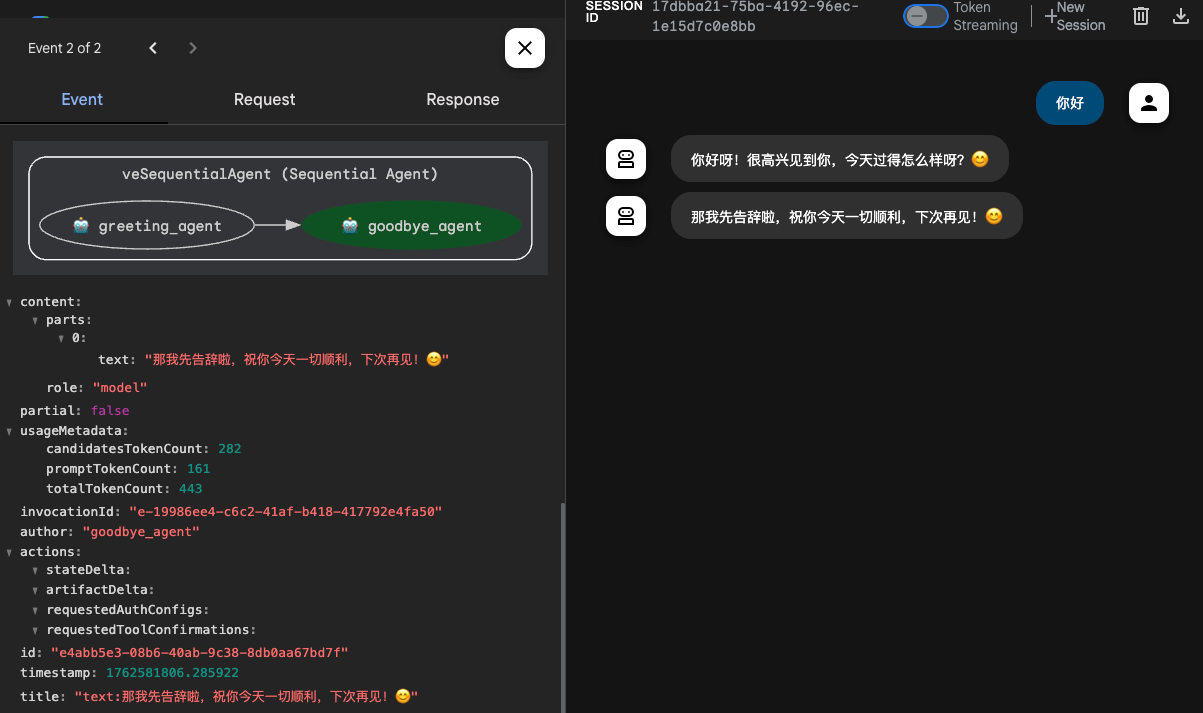
样例:下面给出一个文案生成 Agent 来演示顺序型 Agent 的执行流程。我们实现 3 个 Agents 来执行“打招呼—再见”工作流。调用示意图如下所示,SequentialAgent 按照用户定义的顺序,依次调用 greeting_agent 和 goodbye_agent,每个子 Agent 完成自己的任务后,将结果传递给下一个 Agent。
import asyncio

from veadk import Agent, Runner
from veadk.agents.sequential_agent import SequentialAgent

greeting_agent = Agent(
    name="greeting_agent",
    description="A friendly agent that greets the user.",
    instruction="Greet the user warmly.",
)

goodbye_agent = Agent(
    name="goodbye_agent",
    description="A polite agent that says goodbye to the user.",
    instruction="Say goodbye to the user politely.",
)

root_agent = SequentialAgent(sub_agents=[greeting_agent, goodbye_agent])

if __name__ == "__main__":
    runner = Runner(root_agent)
    response = asyncio.run(runner.run("你好"))
    print(response)
运行结果:
循环型 Agent
定义:循环型 Agent 会重复执行子 Agents,直到满足特定条件才退出循环。适用于需要迭代优化、多轮对话或条件判断的复杂任务。
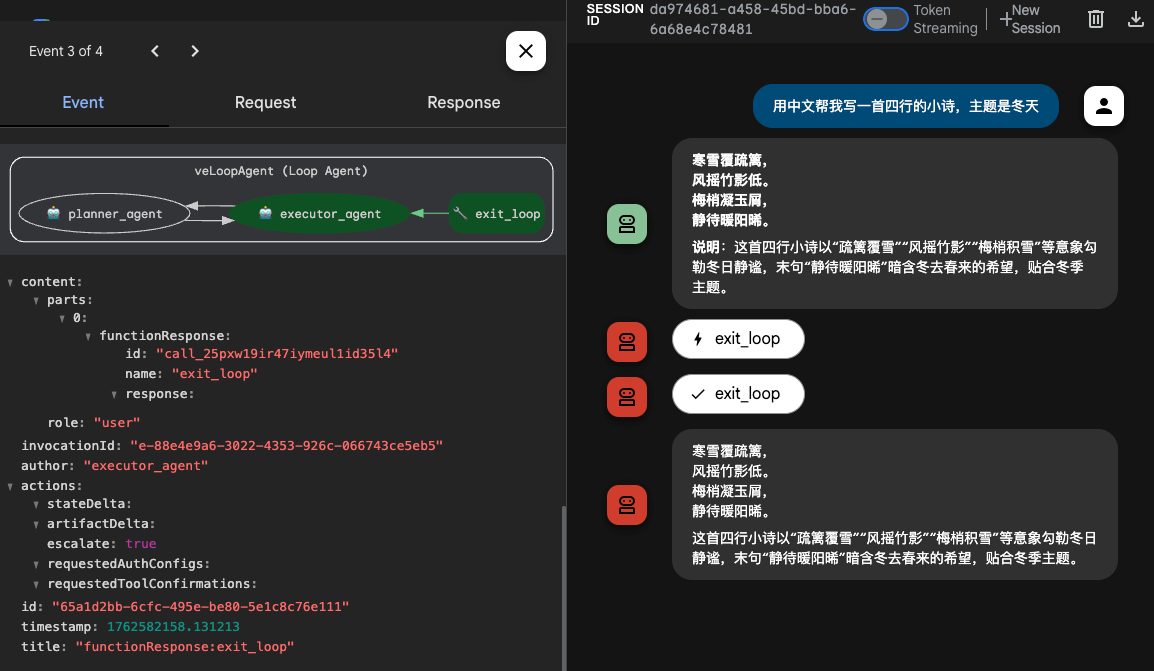
样例:下面给出一个诗歌创作 Agent 来演示循环型 Agent 的执行流程。我们实现 2 个 Agents 来执行“计划-执行”循环工作流,并且设置最大 3 次循环次数:
- 计划 Agent:根据用户目标制定下一步行动计划
- 执行 Agent:执行计划并检查结果,完成后调用退出函数
循环型 Agent 调用示意图如下所示,LoopAgent 会循环调用 planner_agent 和 executor_agent,直到 executor_agent 检测到任务完成并调用退出函数。
import asyncio

from google.adk.tools.tool_context import ToolContext
from veadk import Agent, Runner
from veadk.agents.loop_agent import LoopAgent


def exit_loop(tool_context: ToolContext):
    print(f"  [Tool Call] exit_loop triggered by {tool_context.agent_name}")
    tool_context.actions.escalate = True
    return {}


planner_agent = Agent(
    name="planner_agent",
    description="Decomposes a complex task into smaller actionable steps.",
    instruction=(
        "Given the user's goal and current progress, decide the NEXT step to take. You don't need to execute the step, just describe it clearly. "
        "If all steps are done, respond with 'TASK COMPLETE'."
    ),
)

executor_agent = Agent(
    name="executor_agent",
    description="Executes a given step and returns the result.",
    instruction="Execute the provided step and describe what was done or what result was obtained. If you received 'TASK COMPLETE', you must call the 'exit_loop' function. Do not output any text.",
    tools=[exit_loop],
)

root_agent = LoopAgent(
    sub_agents=[planner_agent, executor_agent],
    max_iterations=3,  # Limit the number of loops to prevent infinite loops
)

if __name__ == "__main__":
    runner = Runner(root_agent)
    response = asyncio.run(runner.run("用中文帮我写一首三行的小诗,主题是秋天"))
    print(response)
运行结果:
并行型 Agent
定义:并行型 Agent 会同时执行多个子 Agents,适用于可以独立处理的任务,如优缺点分析、多角度评估等场景,能够显著提高处理效率。
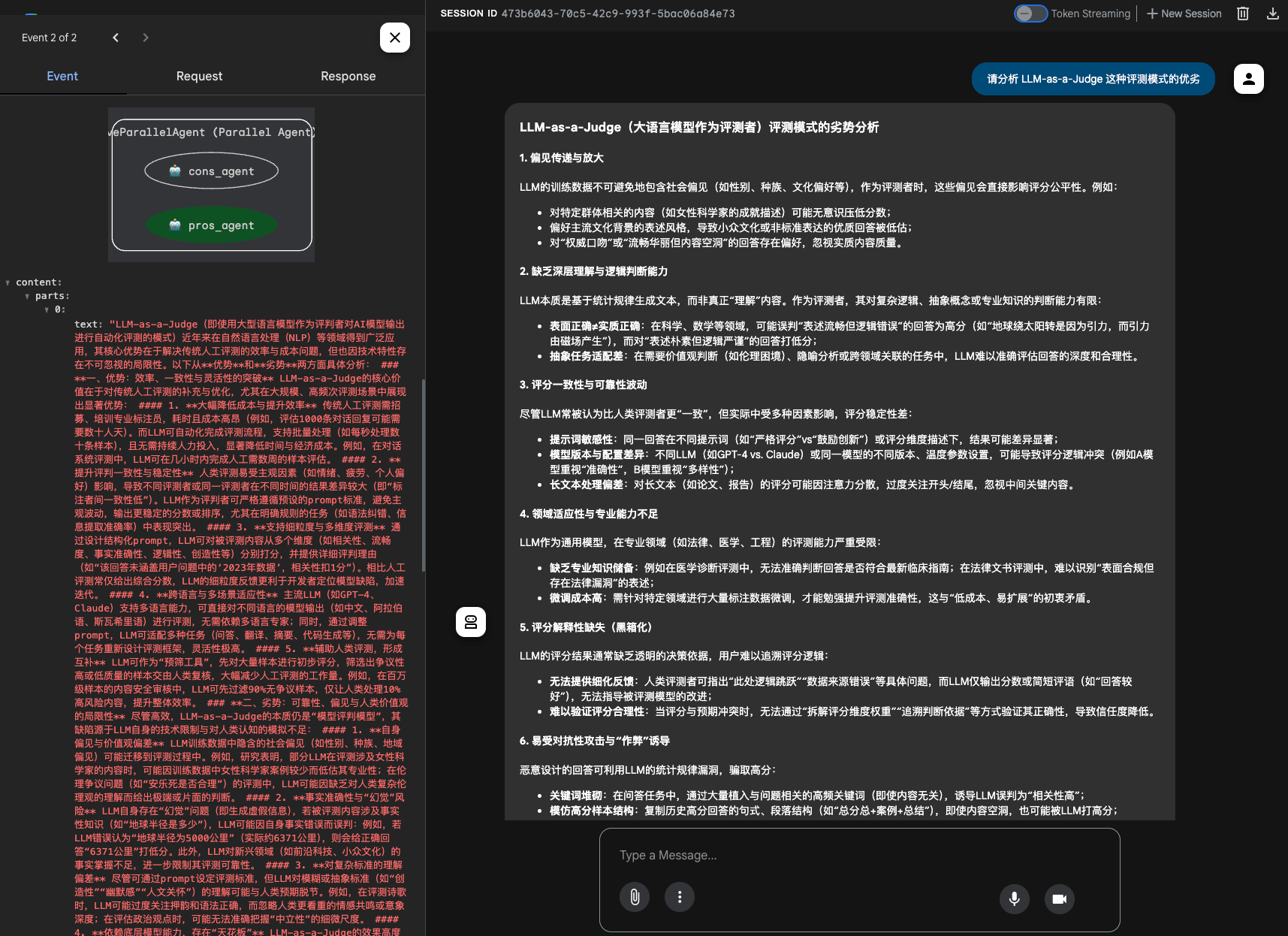
样例:下面给出一个优缺点分析 Agent 来演示并行型 Agent 的执行流程。我们实现 2 个 Agents 来并行分析“LLM-as-a-Judge 评测模式”:
- 优点分析 Agent:识别和阐述该模式的优势
- 缺点分析 Agent:识别和阐述该模式的劣势
调用示意图如下所示,ParallelAgent 会同时调用 pros_agent 和 cons_agent,两个子 Agent 独立运行,最后将结果汇总返回。
import asyncio

from veadk import Agent, Runner
from veadk.agents.parallel_agent import ParallelAgent

pros_agent = Agent(
    name="pros_agent",
    description="An expert that identifies the advantages of a topic.",
    instruction="List and explain the positive aspects or advantages of the given topic.",
)

cons_agent = Agent(
    name="cons_agent",
    description="An expert that identifies the disadvantages of a topic.",
    instruction="List and explain the negative aspects or disadvantages of the given topic.",
)

root_agent = ParallelAgent(sub_agents=[pros_agent, cons_agent])

if __name__ == "__main__":
    runner = Runner(root_agent)
    response = asyncio.run(runner.run("请分析 LLM-as-a-Judge 这种评测模式的优劣"))
    print(response)
运行结果: